


- 영문명
- A Study of the Musical Trends Underlying the Differences Between Korean and Japanese Rock in the 2000s
- 발행기관
- 글로벌문화콘텐츠학회
- 저자명
- 이주원(Juwon Lee) 서호덕(Hoduck Seo)
- 간행물 정보
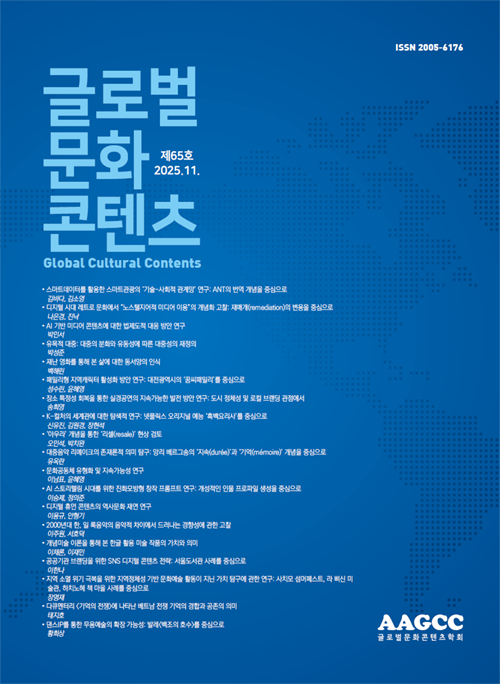
- 『글로벌문화콘텐츠』제65호, 317~335쪽, 전체 19쪽
- 주제분류
- 인문학 > 기타인문학
- 파일형태
- 발행일자
- 2025.11.30
국문 초록
2003년부터 일본 대중음악이 본격적으로 개방되어 한국에 소개된 지도 벌써 20년이 넘게 흘렀다. 물론 그 이전부터 일본 대중음악이 한국 대중음악에 음성적 또는 간접적으로 영향을 미쳐왔다는 점을 부정하는 대중 문화인들은 별로 많지 않다. 하지만 그럼에도 불구하고 일본 대중음악과는 분명한 차이점을 보이며 한국 대중음악만의 개성을 확립해온 것 또한 분명하다. 2000년대는 본격적인 일본 대중음악의 유입 시기이도 하며, 일본 대중음악에 대한 많은 번안곡들이 한국 가수들에 의해 발표되는 등 일본 대중음악에 대한 관심이 증폭되던 시기였다. 또한 90년대 활동을 시작했던 인디아티스트들이 대거 주류 대중음악계에 편입을 시도하여 2000년대 초반 다양한 장르의 록음악을 하는 아티스트들이 활동하였다. 일본 또한 마찬가지로 90년대 ‘밴드붐’이라 불릴 정도의 록음악 황금기가 도래하여 2000년대 까지 많은 록 밴드들이 활동하였다. 이에 본 논문은 2000년대의 일본 대중음악과 한국 대중음악, 특히 록음악 장르에 국한하여 음악적 비교 연구를 진행하고 이를 통해 양국 대중음악의 경향성을 들여다 볼 수 있는 그동안의 많은 선행연구에 더해 또 다른 퍼즐 조각을 제시하고자 하였다. 이를 위해 한국과 일본의 록음악을 선율, 리듬에서 분류/분석하고 세부장르 분포의 차이를 분석해 보았다. 그리고 분석을 통해 드러난 한⋅일 록음악의 음악적 차이를 통해 2000년대 양국 록음악의 경향성을 유추해 보았다.
영문 초록
It has already been over 20 years since Japanese popular music was officially introduced and opened to the South Korean public in 2003. The fact of the matter is that there are not many people in the popular culture who would deny that Japanese popular music has had a negative or indirect influence on Korean popular music even before the Japanese invasion. However, it is also clear that Korean popular music has established a unique identity by showing clear differences between Japanese popular music and Korean popular music. During the 2000s, it was also a period when there was a large influx of Japanese popular music, and a number of Korean singers released covers of Japanese popular music at this time, which was a time when there was a great deal of interest in Japanese popular music. The early 2000s also saw a significant increase in the number of indie artists who had been active in the 90s attempting to break into the mainstream popular music scene, as well as artists performing different genres of rock music. It was also during the 90s that Japan experienced a golden age of rock music, known as the “band boom,” (rapid rise in popularity) and many rock bands were still active until the early 2000s. As a result, this paper conducted a musical comparative study of popular music genres from the Japanese and Korean cultures in the 2000s, particularly rock music. Through this, it attempted to provide another piece of the puzzle in addition to the many previous research studies that have been done to analyze the identity of popular music in these two countries. The purpose of the study is to categorize and analyze Korean and Japanese rock music in terms of melody and rhythm, and to examine the differences in the distribution of subgenres within the two genres. Further, through the analysis of the musical differences between Korean and Japanese rock music, it was possible to infer the tendencies of the rock music of both countries in the 2000s by taking into account their musical differences.
목차
1. 서론
2. 2000년대 한국 록음악
3. 2000년대 일본 록음악
4. 한⋅일 록음악 비교
5. 한⋅일 록음악의 경향차이에서 나타나는 의미
6. 결론
참고문헌
키워드
해당간행물 수록 논문
참고문헌
최근 이용한 논문
교보eBook 첫 방문을 환영 합니다!

신규가입 혜택 지급이 완료 되었습니다.
바로 사용 가능한 교보e캐시 1,000원 (유효기간 7일)
지금 바로 교보eBook의 다양한 콘텐츠를 이용해 보세요!