


- 영문명
- A Comparative Study of Eastern and Western Views on Life through Disaster Cinema
- 발행기관
- 글로벌문화콘텐츠학회
- 저자명
- 백해린(Hae-lin Baek)
- 간행물 정보
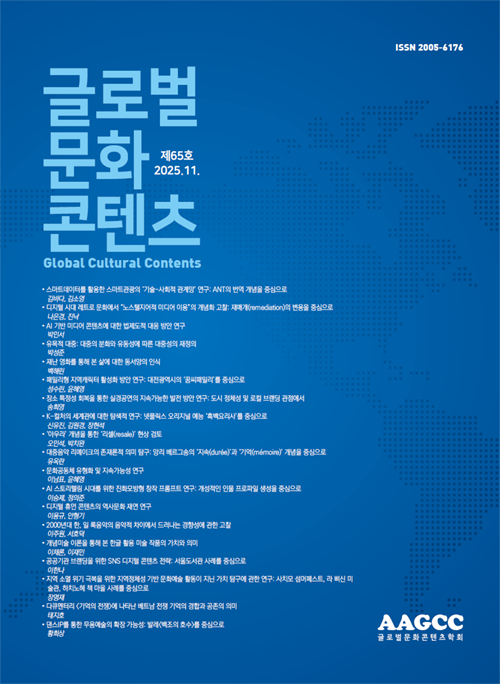
- 『글로벌문화콘텐츠』제65호, 93~110쪽, 전체 18쪽
- 주제분류
- 인문학 > 기타인문학
- 파일형태
- 발행일자
- 2025.11.30
국문 초록
최근 새로운 바이러스의 출현과 전염병, 지구 온난화로 인한 이상 기후 등은 더 이상 추상적 담론이나 상상 속 사건이 아닌 그 어느 때보다 가시적이고 현실적인 양상으로 인간의 삶을 위협하고 있다. 이처럼 인류가 직면한 위기와 아포칼립스, 포스트아포칼립스 장르는 불확실한 미래에 대한 공포나 재난의 재현을 넘어, 사회가 불안과 위기를 해석하고 극복하는 방식을 탐색하는 스토리로 대중의 공감을 이끌어 내고 있다. 본 연구는 비교문화론적 관점에서 <28일 후>, <28주후>, <28년 후>와 <부산행>, <서울역>, <반도>를 통해 인간의 삶에 대한 동서양의 문화가치관을 비교하였다. 그 결과영화 '28 시리즈'는 개인주의, 낮은 권력 거리, 불확실성 수용 성향을 드러내고 있으며, 등장인물은 자유와 생존을 위해스스로 규칙을 만들거나 기존 윤리규범을 넘어선 결정을 내린다. 반면 <부산행>, <서울역>, <반도>는 집단주의, 관계중심성, 높은 불확실성 회피가 스토리의 중심에 존재한다. 영화는 위기 상황에서 안전을 확보하기 위해 타인과의 결속을 강화하고, 윤리적 책임을 생존의 우선 조건으로 묘사한다. 또한 영화는 공간을 통해 사회적 관계와 권력 구조를 묘사한다. 영화 '28 시리즈'는 공간을 통제와 실험의 장으로, 한국 영화는 정서적 연대와 윤리적 선택의 장으로 상징화 하고 있으며, 이러한 차이를 통해 재난을 바라보는 문화적 상상력이 서로 다르다는 것을 확인하였다.
이처럼 <28일 후>, <28주 후>, <28년 후>와 <부산행>, <서울역>, <반도>는 아포칼립스 장르적 특성을 공유하면서도 문화권별 차이를 보이고 있다.
영문 초록
Recent outbreaks of novel viruses, the global spread of infectious diseases, and extreme weather events caused by climate change have become tangible threats rather than abstract concerns. Against this backdrop, apocalyptic and post-apocalyptic narratives have gained renewed relevance, functioning not only as representations of fear and uncertainty but also as cultural frameworks through which societies interpret and negotiate crisis. This study examines the cultural value orientations embedded in the British 28 Days Later, 28 Weeks Later, and 28 Years Later series and the Korean films Train to Busan, Seoul Station, and Peninsula, adopting a cross-cultural comparative approach. The analysis reveals that the “28 series” reflects individualism, low power distance, and a high tolerance for uncertainty. Characters frequently establish their own rules or make decisions that transcend established ethical norms in the pursuit of autonomy and survival. In contrast, the Korean films express collectivism, relational orientation, and strong uncertainty avoidance, em『phasizing group solidarity and ethical responsibility as essential conditions for survival during crisis situations. The study further demonstrates that spatial representation plays a significant role in articulating social relationships and power structures. While the “28 series” frames space as a site of control and experimentation, the Korean films portray space as a locus of emotional solidarity and moral choice. These differences highlight distinct cultural imaginaries of disaster and survival.
By comparing two major zombie–apocalypse film clusters, this study illustrates how shared genre conventions can diverge into culturally specific narrative forms. The findings contribute to a deeper understanding of how apocalyptic cinema reflects and constructs societal values in different cultural contexts.
목차
1. 들어가며
2. 포스트아포칼립스 영화와 문화가치관
3. 한국 아포칼립스 영화의 담론 분석
4. 아포칼립스 장르를 통해 본 서양적 문화가치관
5. 나가며
참고문헌
키워드
해당간행물 수록 논문
참고문헌
최근 이용한 논문
교보eBook 첫 방문을 환영 합니다!

신규가입 혜택 지급이 완료 되었습니다.
바로 사용 가능한 교보e캐시 1,000원 (유효기간 7일)
지금 바로 교보eBook의 다양한 콘텐츠를 이용해 보세요!