


학술논문
The Integrative Approach to the Derivation of Interrogatives in Korean and English
이용수 25
- 영문명
- 발행기관
- 현대문법학회
- 저자명
- Hong Joon Um
- 간행물 정보
- 『현대문법연구』제127호, 135~150쪽, 전체 16쪽
- 주제분류
- 인문학 > 언어학
- 파일형태
- 발행일자
- 2025.09.30
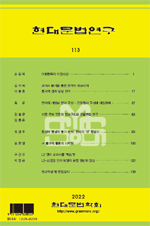
국문 초록
This paper investigates the derivation of interrogatives in Korean and English from an integrative perspective that connects syntax, prosody, and speech act. Challenging the traditional Minimalist view that the Q-feature on C directly determines interrogative force, the study highlights the contradictory treatment of Q-features in Chomsky’s framework: interpretable in yes/no questions but uninterpretableinwh-questions. Toresolve thisinconsistency, the paper adopts a Speech Act Phrase (SAP)-based model, in which the head of SAP determines the sentence type by encoding the speaker’s illocutionary force, and the head of CP realizes this information morphologically or prosodically. Cross- linguistic data reveal a crucial asymmetry. In Korean, sentence-final endings and prosodic contours can independently license interrogativity, rendering wh-movement unnecessary, whereas in English prosodic insufficiency compels syntactic movement such as wh-fronting. This analysis shows that prosody not only reflects but also shapes syntactic operations, liberating syntax in Korean while driving it in English. By situating interrogative force in SAP rather than in C, the study resolves the stipulative nature of Q-features and provides a more coherent account of cross-linguistic variation in interrogative formation.
영문 초록
목차
1. Introduction
2. The Contradictory Nature of Q-Features in Chomsky’s Framework
3. SAP-Based Account of Sentence-Type Determination
4. Determination of Sentence Type
5. Conclusion
References
해당간행물 수록 논문
참고문헌
최근 이용한 논문
교보eBook 첫 방문을 환영 합니다!
신규가입 혜택 지급이 완료 되었습니다.
바로 사용 가능한 교보e캐시 1,000원 (유효기간 7일)
지금 바로 교보eBook의 다양한 콘텐츠를 이용해 보세요!