


- 영문명
- A Study on the Interpretation of the Analects by Choi Sook-min
- 발행기관
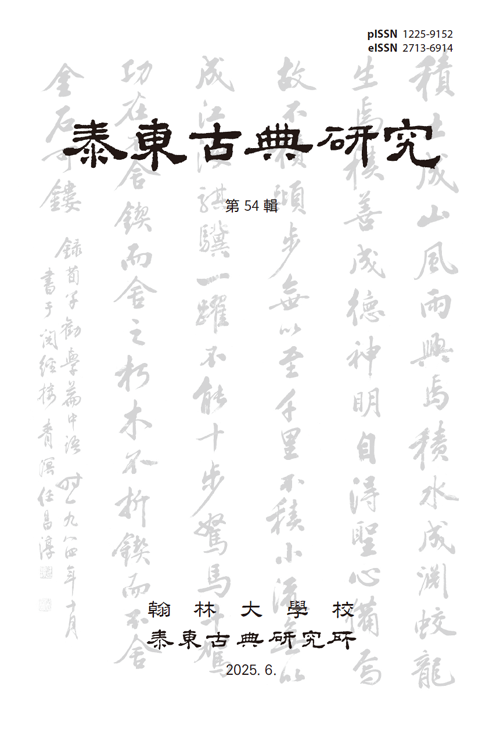
- 한림대학교 태동고전연구소
- 저자명
- 이원석(Won-Seok LEE)
- 간행물 정보
- 『태동고전연구』제54집, 297~336쪽, 전체 40쪽
- 주제분류
- 인문학 > 문학
- 파일형태
- 발행일자
- 2025.06.30
국문 초록
이 논문의 주요 분석 대상은 『답문유편(答問類篇)』 권7 「논어」이다. 『답문유편』은 『노사선생전집』에 부록으로 실려 있던 문답록으로, 기정진 사후 그의 제자들이 스승과 문인 사이에 이루어진 질의·응답을 왕복 서간에서 발췌한 후 주제별로 분류해 놓은 것이다. 특별히 『답문유편』 내의 「논어」 항목을 분석 대상으로 삼은 까닭은, 그에 대한 기정진과 제자 최숙민의 문답 속에서 노사학파 특유의 경전 해석 양상을 엿볼 수 있다고 필자는 판단했기 때문이다. 성리설의 개념적 이해에 치중하던 최숙민을 향해 기정진은 『논어』를 먼저 공부하라고 권고했다. 『논어』를 관통하는 “아래에서 배워서 위를 통달한다.[下學而上達]”라는 정신이, 추상적 진리에 성급히 접근하려는 최숙민의 조급성을 완화해 주리라고 기정진이 기대했기 때문이다. 기정진에 따르면 『논어』를 해석하는 구체적 방법은 『논어』 각 구절의 의미를 객관적으로 이해하는 데서 머물지 않고, 공자의 발언이 발화된 상황에 자신을 갖다 놓고 추체험(追體驗)해 보는 것이었다. 하지만 체험적 이해는 섣부른 체험을 온전한 것으로 착각하는 주관성의 오류를 낳을 수있다. 이런 오류에 빠지지 않으려면, 자신의 체험에 내재한 상대성과 그런 체험으로 얻게 된내용의 불완전성을 늘 자각하면서 타인이 체험한 내용이 자신의 것보다 나을 수 있다고 생각하는 것이라고 기정진은 강조했다. 최숙민은 기정진의 가르침을 받아들여 『논어』의 해석에 있어 무엇보다도 체험적 이해와 자기 성찰을 중시하였다. 이런 노력의 결과 그는 기존에 정통으로 받아들여지던 주희의 『논어』 주석을 다시 검토하게 되었고, 더 나아가 그에 대한 독창적 해석을 제시하게 되었다. 하지만 그는 체험적 해석을 강화한 결과 주관성을 지나치게 강조하는 경향을 띠고 말았다. 이로 인해 최숙민은 스승 기정진으로부터 비판을 받게 되었다. 최숙민은 기정진의 가르침과 비판에 바탕을 두고, 그의 후학에게 『논어』를 가르칠 때 체험적 이해를 강조하는 동시에 객관적 이해의 중요성을 설파하는 균형 잡힌 태도를 보여주게 되었다.
영문 초록
The main focus of this paper is the analysis of “the Analects” in Volume 7 of the Dapmunyupeon(答問類編). The Dapmunyupeon is a question-and-answer text included as an appendix in the Nosajip(蘆沙集). After the death of Ki Jeong-jin (奇正鎭), his disciples compiled the questions and answers exchanged between the teacher and his students from their correspondences, categorizing them by subject. “The Analects” from Volume 7 of the Dapmunyupeon (答問類 編) were analyzed in this paper because I determined that the questions and answers between Ki Jeong-jin and his disciple Choi Sook-min reveal a distinctive tendencies in interpreting the scriptures of Confucianism. Ki Jeong-jin recommended that Choi Sook-min, who was focused on gaining a conceptual understanding of Neo-Confucianism, begin his studies with the Analects. Ki Jeong-jin believed that the spirit of “learning from below and mastering above”(下學而上達), which runs through the Analects, would help alleviate Choi Sook-min’s impatience to jump straight to abstract truths. According to Ki Jeong-jin, the proper way to interpret the Analects was not merely to understand the meaning of each verse objectively, but to immerse oneself in the context in which Confucius’ remarks were made and experience them anew. However, experiential understanding can lead to a subjective error, where premature experiences are mistaken for complete or fully formed ones. Ki Jeong-jin emphasized that you should be always conscious of the relativity and imperfection inherent in his own experiences, and believe that the experiences of others could often surpass his own. Choi Sook-min embraced Ki Jeong-jin’s teachings, placing greater emphasis on experiential understanding and self-reflection in his interpretation of the Analects. As a result of these efforts, he revisited Zhu Xi’s commentary on the Analects, which had long been regarded as orthodox, and offered his own original interpretation. However, in reinforcing the experiential approach, he began to overemphasize subjectivity, which led to criticism from his teacher. Drawing from Ki Jeong-jin’s guidance and critique, Choi Sook-min, when teaching the Analects to his younger students, emphasized experiential understanding while maintaining a balanced approach by also stressing the importance of objective interpretation.
목차
1. 머리말
2. 기정진의 『논어』 독법
3. 『답문유편』에 나타난 최숙민의 독법
4. 최숙민의 주관적 편향과 기정진의 비판
5. 맺음말
참고문헌
해당간행물 수록 논문
참고문헌
최근 이용한 논문
교보eBook 첫 방문을 환영 합니다!

신규가입 혜택 지급이 완료 되었습니다.
바로 사용 가능한 교보e캐시 1,000원 (유효기간 7일)
지금 바로 교보eBook의 다양한 콘텐츠를 이용해 보세요!