


- 영문명
- Mujin(1748) Tonginsa History-Related Written Conversations and Its Meaning
- 발행기관
- 한림대학교 태동고전연구소
- 저자명
- 황현우(Hyun-Woo HWANG)
- 간행물 정보
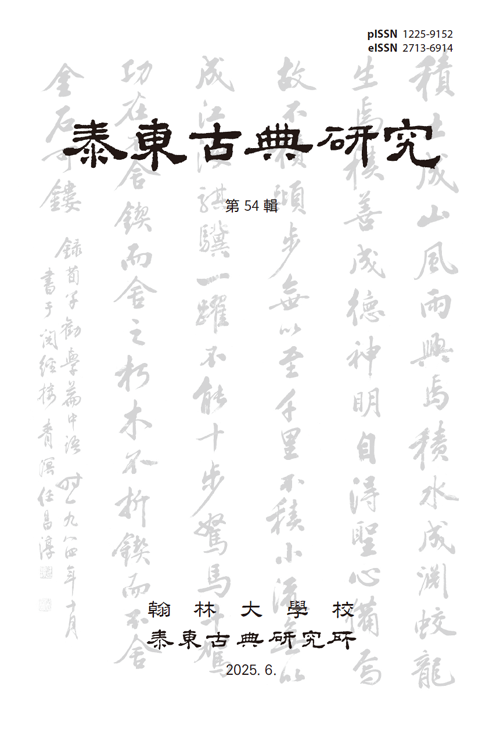
- 『태동고전연구』제54집, 113~138쪽, 전체 26쪽
- 주제분류
- 인문학 > 문학
- 파일형태
- 발행일자
- 2025.06.30
국문 초록
임진왜란 이후 조일 간의 외교사절인 통신사는 양국의 우호증진에 있어서 큰 역할을 하였다. 일본 지식의 생성창구로서의 통신사행은 탐색과 대결, 상호이해 등의 타자 인식에 있어서 조선에게 큰 영향을 주었다. 무진(1748) 사행의 직전 사행인 기해(1719) 사행에서 일본 문인키노시타 란코(木下蘭皐)는 조선 측 제술관(製述官)과 삼사 서기(三使 書記)에게 직전 사행인 기해 사행에서 통신사와의 인연을 소개한다. 구연(舊緣)과 숙연(宿緣)을 통해 통신사와의 어색함과 긴장을 풀고 필담을 원활하게 진행할 수 있는 효과를 얻으려 했다.
고대 한국의 역사적 인물들을 언급하면서 통신사와의 직접적인 인연을 거론하는 경우도 있었다. 일본 문인 시노 료는 제술관 박경행에게 일본과 관련되는 여러 박씨들을 들며 친근감을 조성하려고 노력하고 있다. 이를 통해 어색한 분위기를 깨고 필담이 원활하게 진행될 수 있는효과를 얻으려고 했다. 하지만 원래 의도를 달성하지 못하는 모습을 보여준다.
무진 사행 필담에서는 단군과 왕인과 관련된 필담이 보인다. 왕인과 관련된 필담은 주로일본 문사들이 조선 문사들에게 왕인에 대한 기록에 조선의 서적에도 있는가라는 것이었다. 신묘(1711) 사행 중 일본 문사가 제술관 이현에게 그에 관해 질문하자, 그는 “왕인이 『천자문』과 『논어』를 가져와 일본에 문자가 있게 되었다”는 기록이 전한다고 답했다. 그런데 일본 문인들이 이 필담의 내용에 근거하여 이후의 사행에서도 조선에 왕인의 기록이 전하고 있다고 생각했다. 조선의 책에도 왕인의 기록이 남아 있을 것이라는 일본 문사들의 과도한 기대의 투영으로 인하여 오해가 발생한 상황을 보여주고 있는 것이다.
18세기의 일본 문사들은 조선의 지식을 수집하고 그것을 습득하려 노력하는 모습을 보였다. 고대의 삼국과 일본의 관계에 관련된 역사 기록, 삼국의 역사와 언어 등에 관심을 나타냈다. 일본 문사들은 삼국의 기록 중에서도 『일본서기』에 나타나는 가야 제국(諸國)의 국명에 대해서 묻기도 했으며, 한국 고대사와 일본 학문의 시원(始元)과 관련이 있는 단군과 왕인에 대해 묻기도 했다. 그들은 일본 역사와 관련된 기록이 조선의 서적에도 있는지를 조선 문사에게 확인하려고 했던 것이다.
일본 문사는 조선 문사와의 필담을 통해 자신의 지식을 조선 문사들에게 인정 혹은 확인받고자 했다. 일본 문사가 조선 문사와 필담교류를 통해 얻고자 한 것과 조선 지식 습득의 이면에는 일본 고대 역사에 대한 증거를 탐색하고 확보하려는 의도가 있었던 것이다.
영문 초록
After the Imjin War, the Tongsinsa, a diplomatic envoy between Joseon and Japan, played a major role in promoting friendship between the two countries.
The Tongsinsa as the only window for the creation of Japanese knowledge had a great influence on Joseon. This paper intends to pay attention to the contents of historical essays in the record of the Mujin Tongsinsa in 1748.
In order for the written dialogue between the two countries to be carried out smoothly, it is important to elicit dialogue through memories or experiences that can be shared with each other. A typical example is the method through the mention of Gooyeon(舊緣) and Sookyeon(宿緣). Japanese writers tried to obtain the effect of relieving the awkwardness and tension with the Tongsinsa through Gooyeon(舊緣) and Sookyeon(宿緣).
However, there was also a case of mentioning historical figures of ancient Korea and direct relations with the Tongsinsa. It is intended to form a sense of familiarity by referring to the blood ties between historical figures whose names remain in the records of ancient Korea-Japan relations and the Tongsinsa. Japanese writer Shino Ryo(篠亮) admired the loyalty and spirit of Park Je-sang (朴堤上), who devoted himself to the country and the king even when he died, and he asks the question, “Isn't he a descendant of Park Kyung-haeng(朴敬行), a public official with the same surname?” In fact, he is trying to raise the other person by mentioning the great ancestors of his predecessors. In his writing story of the Tongsinsa, Shino Ryo is trying to create a sense of familiarity by listening to historical figures and various Park families related to Japan. Through this, he tried to break the awkward atmosphere and enjoy the effect of smooth writing.
In the Mujin speculative writing story, writing stories related to Dangun and Wangin are seen. Wangin is known as a person who took Cheonjamun and Analects from Baekje and taught Japan to write and study abroad through this. In other words, he was a person related to Japanese studies and the origin of Confucianism. The writing story related to Wangin is mainly seen as an intention to confirm that Japanese writers tell Joseon writers, “Is it in the record of Wangin?” However, it can be seen that the writing-related writing-story about the king continues based on incorrect information in the later writing-story of the speculation. It can be said that it is a writing-story that shows a situation in which Japanese writers misunderstood due to the projection of excessive expectations that the king's record remains in Joseon's books.
Japanese literature in the 18th century showed an effort to collect and acquire Joseon's knowledge. They showed interest in historical records related to the relationship between the ancient Three Kingdoms and Japan, and the history and language of the Three Kingdoms.
The Japanese writers sought to be recognized or confirmed by the Joseon writers through writing interviews with the Joseon writers. What the Japanese writers wanted to obtain through writing-talk exchanges with the Joseon writers was the intention to search and secure evidence of ancient Japanese history behind the acquisition of Joseon knowledge.
목차
1. 들어가며
2. 조선의 역사상 인물과 동성(同姓) 여부 확인
3. 문명의 표상으로서의 왕인과 단군
4. 고대 한국 역사를 통한 일본 역사의 증거 탐색
5. 나가며
참고문헌
키워드
해당간행물 수록 논문
참고문헌
최근 이용한 논문
교보eBook 첫 방문을 환영 합니다!
신규가입 혜택 지급이 완료 되었습니다.
바로 사용 가능한 교보e캐시 1,000원 (유효기간 7일)
지금 바로 교보eBook의 다양한 콘텐츠를 이용해 보세요!