

학술논문
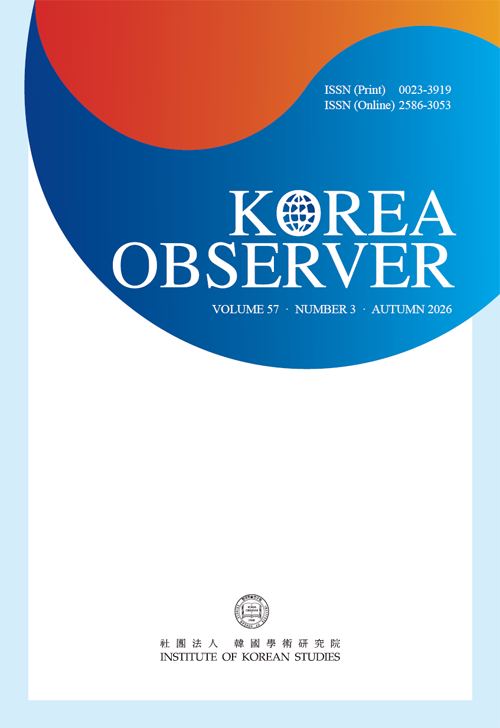
Generational Divergence, Structural Cleavages, and Contingent Optimism in South Korean Unification Attitudes
이용수 49
- 영문명
- 발행기관
- 한국학술연구원
- 저자명
- Seungwoo Han
- 간행물 정보
- 『Korea Observer』Vol 57, No 3, 475~508쪽, 전체 34쪽
- 주제분류
- 사회과학 > 정치외교학
- 파일형태
- 발행일자
- 2026.09.30
8,760원
구매일시로부터 72시간 이내에 다운로드 가능합니다.
이 학술논문 정보는 (주)교보문고와 각 발행기관 사이에 저작물 이용 계약이 체결된 것으로, 교보문고를 통해 제공되고 있습니다.
국문 초록
Public support for Korean unification is no longer a settled national consensus but a reflection of generational experience, structural division, and political context. This study examines how age, domestic cleavages, and episodic diplomatic events interact to shape domain-specific expectations about unification's integrative potential. Drawing on perspectives from political sociology, political psychology, and comparative politics, it investigates whether unification is perceived as a means to reduce economic inequality, mitigate regional disparity, or alleviate political polarization. Using nationally representative data from the Unification Perception Survey (2013-2024), the analysis reveals a clear generational gradient: older individuals consistently report higher expectations, whereas younger individuals express lower optimism. Despite prevailing skepticism among those in their twenties, a pronounced but short-lived surge in optimism emerged in 2019, coinciding with the period of intensive 2018 inter-Korean diplomacy. The findings suggest that while symbolic events can temporarily activate receptivity among younger generations, such effects fade quickly without credible policy follow-through. Sustaining support for unification therefore requires aligning symbolic initiatives with tangible, domain-specific outcomes.
목차
Ⅰ. Introduction
Ⅱ. Generational Perspectives on Korean Unification: A Theoretical Framework
Ⅲ. Methods
Ⅳ. Results
Ⅴ. Conclusion
Reference
해당간행물 수록 논문
- Generational Divergence, Structural Cleavages, and Contingent Optimism in South Korean Unification Attitudes
- When Disasters Strike, Do Missiles Fly?: Rethinking North Korea's Provocations, Timing, and the Limits of Diversionary Theory
- Elite Bipartisanship and the Undoing of Partisan Dehumanization: Experimental Evidence from South Korea
- Beyond the Myth of Colonial Modernity: “Comfort Women” and Slavery
- Korea Observer Vol 57, No 3 Contents
- Multidimensional Trust Structures and Welfare Policy Acceptance: Latent Class Analysis of Social Trust Configurations in Korea
- What Shapes Perceptions of Meritocratic Fairness?: Socioeconomic Status, Political Ideology, and Future Outlook among South Korean Youth
관련논문
사회과학 > 정치외교학분야 BEST
- South Korea's Polarized Democracy After Martial Law
- Korea Observer Vol 56, No 4 Contents
- Can Democracy Survive in South Korea?
최근 이용한 논문
교보eBook 첫 방문을 환영 합니다!
신규가입 혜택 지급이 완료 되었습니다.
바로 사용 가능한 교보e캐시 1,000원 (유효기간 7일)
지금 바로 교보eBook의 다양한 콘텐츠를 이용해 보세요!