


- 영문명
- A Study on the Administrative Authority of the President of the United States
- 발행기관
- 전남대학교 법학연구소
- 저자명
- 이환경(Hwan Kyung Lee)
- 간행물 정보
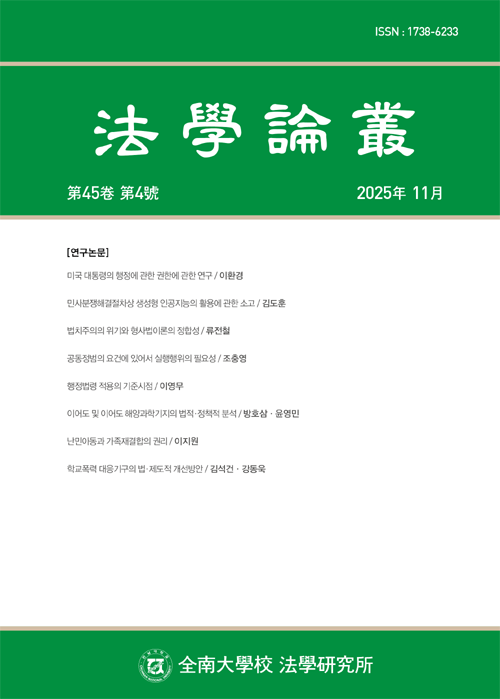
- 『법학논총』제45권 제4호, 1~31쪽, 전체 31쪽
- 주제분류
- 법학 > 법학
- 파일형태
- 발행일자
- 2025.11.30
6,520원
구매일시로부터 72시간 이내에 다운로드 가능합니다.
이 학술논문 정보는 (주)교보문고와 각 발행기관 사이에 저작물 이용 계약이 체결된 것으로, 교보문고를 통해 제공되고 있습니다.
국문 초록
미국의 대통령은 행정부의 수반으로서 광범위한 행정권을 가진다. 이러한 행정권은 권력분립의 원리에서 유래하는 것으로서, 대통령이 행정부를 통솔하고 국가의 정책을 수행하기 위한 필수적인 권한이다. 그러나 이러한 권한이 지나치게 확대될 경우 독재로 이어질 수 있으므로, 의회와 사법부의 견제와 균형을 통하여 적절하게 통제되어야 할 것이다.
미국헌법 제2조 제1항 제1호는 「행정권은 미합중국의 대통령에게 속한다」고 규정하고 있다. 여기서 「행정권」이라 함은 법규를 집행하는 권한, 즉 법률을 구체화하는 행정부의 고유한 권한을 말한다. 대통령은 「법이 충실하게 집행되도록 주의할 의무」(미국헌법 제2조 제3항)를 가지고 있는데, 이는 법집행에 관한 책임과 동시에 권한을 부여하는 것이다.
대통령의 행정권은 법을 집행하기 위하여 필요한 수단을 사용할 「개방적 권한」으로서, 특히 국가위기 시에는 대통령은 가능한 모든 수단을 동원하여 국가 또는 시민을 구해야 할 의무를 가지고 있으므로 미국헌법상의 권한을 초월하여 「특권」이라는 이름으로 막강한 권한을 행사하게 된다.
미국헌법상 대통령은 원칙적으로 입법권을 가지고 있지 않지만, 제2조 제3항(법률을 충실하게 집행할 의무조항)에 근거하여 헌법조항이나 연방의회가 제정한 법률을 집행하기 위하여 필요한 명령을 발할 수 있는데, 이를 행정입법이라고 부르며, 여기에는 「포고령」과 행정명령이 있다.
현대 대통령들은 시어도어 루스벨트 대통령의 관리이론에 따라 미국헌법 제2조에 의하여 미국헌법이나 법률에 금지되지 않는 한 국가이익을 위해 필요하다고 판단되는 모든 조치를 취할 수 있는 특권을 부여받고 있다. 행정명령이 효력을 발생하기 위해서는 1946년의 행정절차법에 의하여 「연방등록부」에 등록・공포되어야 한다.
대통령은 행정부의 수반으로서 공무원임명권과 해임권을 가진다. 즉, 상원의 권고와 동의를 얻어 대사, 공사와 영사, 연방대법원 판사 및 모든 다른 공무원들을 임명한다(미국헌법 제2조 제2항 제2호).
미국헌법 제2조는 대통령이 공무원의 임명권을 가진다고 규정하고 있을 뿐, 그 해임에 관한 명문의 조항을 두고 있지 아니하였으므로 대통령은 단독으로 공무원을 해임시킬 수 있는지, 아니면 상원의 동의권이 해임의 경우에도 적용되는지 문제가 되었다. 1926년의 마이어스 사건에서 연방대법원은 비로소 대통령의 해임권을 인정하게 되었다. 그러나 이 판결은 공무원의 임명권과 해임권을 대통령에게 완전히 위임하는 것으로, 권력분립의 원칙에 위배된다는 비판을 받기도 한다.
행정부특권이라 함은 의회나 법원이 행정부가 보유하고 있는 문서 또는 정보의 제출을 요구하는 경우에 대통령은 이를 거부할 수 있다는 것을 말한다. 행정부특권은 대통령의 의사결정의 자유와 비밀을 보장하기 위한 것으로, 국가안보나 외교 등에 관한 사안에서 특히 중요하게 고려된다.
영문 초록
The president of the United States has extensive executive power as the head of the executive branch. This administrative power derives from the principle of separation of powers and is an essential authority for the president to lead the administration and carry out national policies. However, if these powers are excessively expanded, they can lead to dictatorship, so they should be properly controlled through checks and balances between Congress and the judiciary.
Article 2 (1) 1 of the U.S. Constitution stipulates that “administrative power belongs to the President of the United States of America.” Here, the term “administrative power” refers to the authority to enforce laws, that is, the unique authority of the administration that embodies the law. The President has an obligation to take care to ensure that the law is faithfully enforced (Article 2, Paragraph 3 of the U.S. Constitution), which gives him both responsibility for law enforcement and authority.
The president's executive power is an open power to use the means necessary to enforce the law, especially in a national crisis, and the president has an obligation to save the state or citizens by all means possible, so he exercises enormous power in the name of privilege beyond the U.S. Constitution.
Although the President does not have legislative power under the U.S. Constitution, he can issue orders necessary to enforce constitutional provisions or laws enacted by the Federal Assembly based on Article 2, Paragraph 3 (obligatory provisions to faithfully enforce the law), which is called administrative legislation, and there are declarations and executive orders.
According to President Theodore Roosevelt's management theory, modern presidents are privileged to take any action deemed necessary for the national interest unless prohibited by the U.S. Constitution or law under Article 2 of the U.S. Constitution. For an executive order to take effect, it must be registered and promulgated in the Federal Register under the Administrative Procedure Act of 1946.
The President has the right to appoint and dismiss public officials as the head of the administration. In other words, ambassadors, public corporations and consuls, Supreme Court judges and all other public officials are appointed with the recommendation and consent of the Senate (Article 2, Paragraph 2, No. 2 of the U.S. Constitution).
Article 2 of the U.S. Constitution only stipulates that the President has the right to appoint public officials, but does not have a prestigious provision on the dismissal, so it was questionable whether the president could dismiss public officials alone or whether the Senate's right to consent applies to dismissal. In the Myers case of 1926, the Supreme Court finally recognized the president's right to dismiss. However, the ruling is criticized for violating the principle of separation of powers by completely delegating the right to appoint and dismiss public officials to the president.
The term executive privilege means that if the Congress or the court requests the submission of documents or information held by the administration, the President may refuse to do so. The executive privilege is intended to ensure the president's freedom and confidentiality of decision-making, and is considered particularly important in matters related to national security and diplomacy.
목차
Ⅰ. 서설
Ⅱ. 행정권
Ⅲ. 행정입법에 관한 권한
Ⅳ. 공무원임명권과 해임권
Ⅴ. 행정부특권
Ⅵ. 행정권한에 대한 비판과 평가
Ⅶ. 미국 대통령의 행정에 관한 권한 제도가 한국에 주는 교훈 내지 시사점
Ⅷ. 결론
참고문헌
키워드
해당간행물 수록 논문
참고문헌
관련논문
법학 > 법학분야 BEST
- 인공지능 판사, 과연 가능한가?
- 정치의 사법화와 사법의 정치화 : 온건하고 실용적인 헌법재판의 당위성
- 자국 우선주의 정책과 국제법상 난민⋅이민자 보호-트럼프 행정부의 미국 우선주의를 중심으로-
최근 이용한 논문
교보eBook 첫 방문을 환영 합니다!

신규가입 혜택 지급이 완료 되었습니다.
바로 사용 가능한 교보e캐시 1,000원 (유효기간 7일)
지금 바로 교보eBook의 다양한 콘텐츠를 이용해 보세요!